In experiential terms, the abstract philosophical distinction between subjects and objects is readily understandable when it is translated into the difference between faces and surfaces. A face individuates whoever has it, rendering this being, precisely, a who. Whether smooth or rugged, a surface is the anonymous outer layer of material existence, delimited in its finitude by edges, beyond which this particular surface ends.
Just as the subject-object distinction is not set in stone and has, in fact, recently undergone a thorough questioning and critique, so its palpably experiential corollary is far from secure. Faces are actually made of living surfaces—of skin, above all, but also the protrusions or invaginations of sense organs, without which a face does not open itself to the world and the world remains closed to a face. And, in their uniqueness, in the unrepeatable interplay of their edges, clashing and overlapping, surfaces are not entirely anonymous; instead, they are facialized, beyond the symbolic machinery of metaphor or allegorical connotations. Do houses have faces, with their windows and doors playing the role of their sense organs? Does a mountain have a face, its slopes uniquely bedecked with lush forests and, on a more limited scale, peppered with the white of house walls? Do flowers and trees have faces, too?
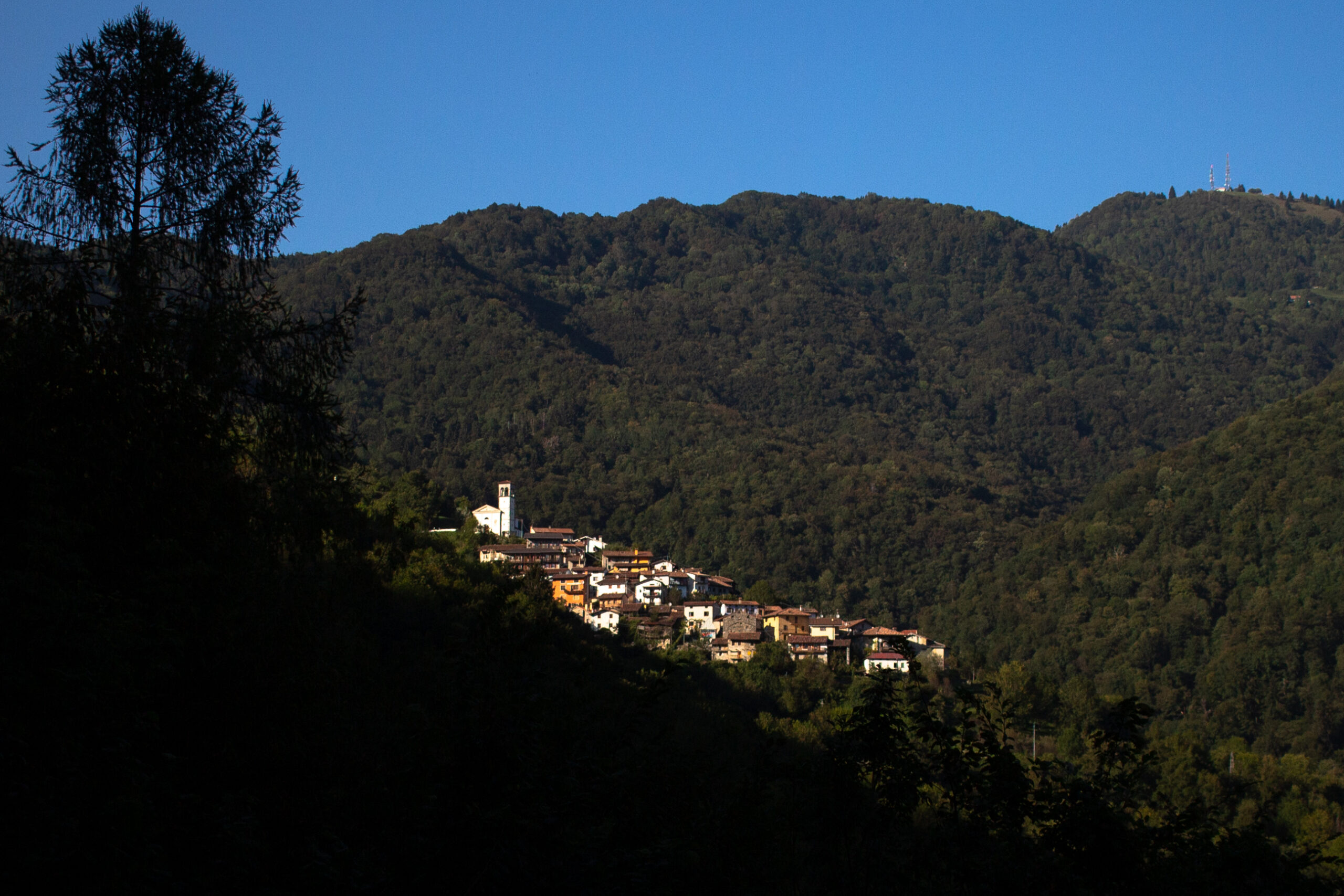
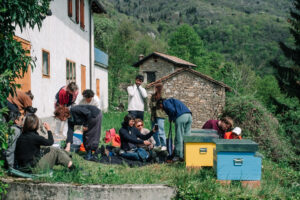
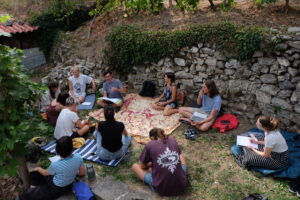
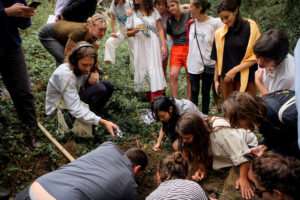
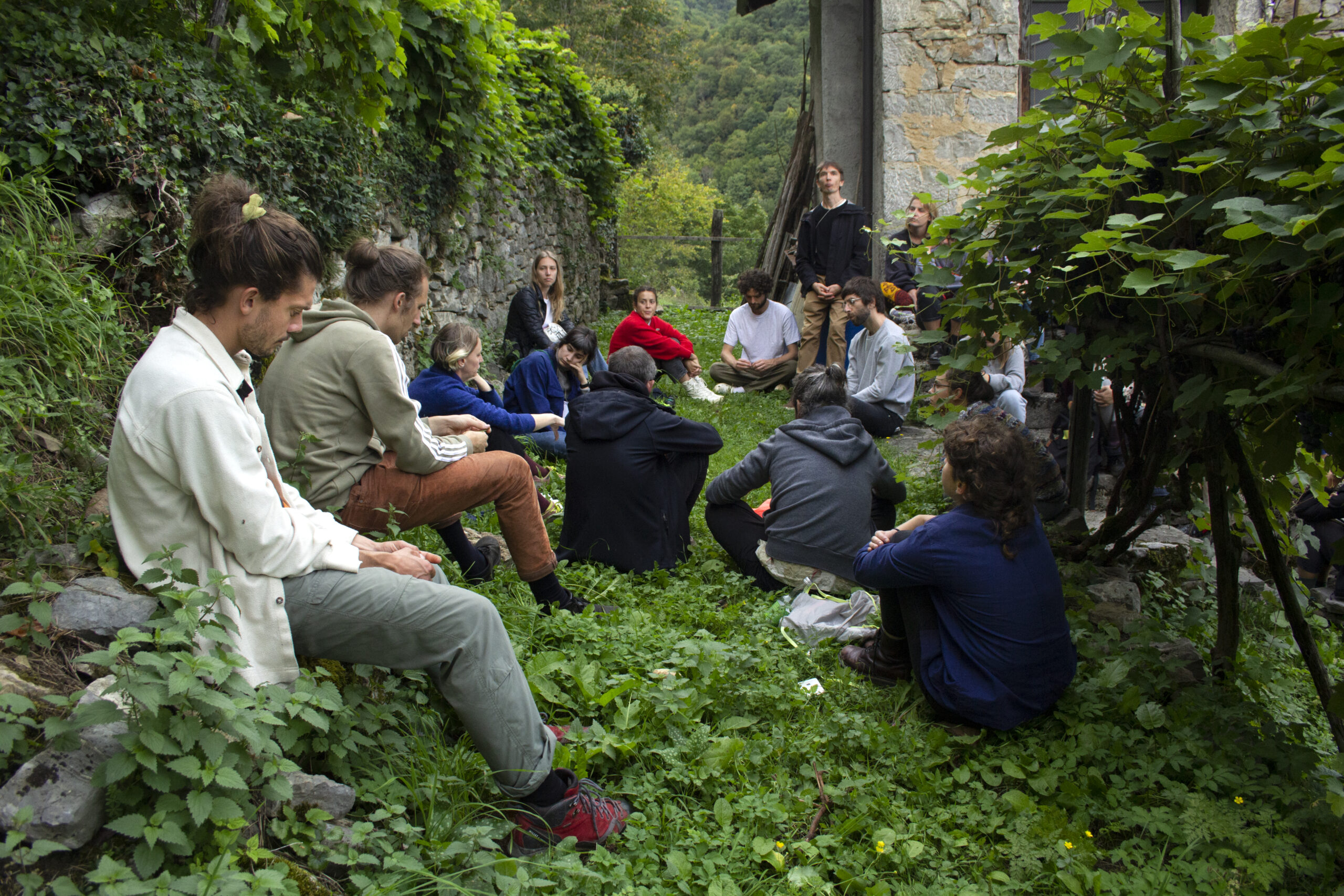
These thoughts and questions grew in me and announced themselves with utmost clarity at a specific place and time. Topolò, August 2022. Why there and then? And does it matter? –It definitely does: for plant-thinking, the context, a singular spatio-temporal situation, is constitutive of that which is thought, of that which grows. I was in Topolò to offer an intensive seminar on “mystical ecology,” a seminar that, despite its circumscribed duration, spilled over the restricted hours and the room, where it was meant to take place, embracing all the hours and every corner of the environment, both inside and outside. The encounters in Topolò conveyed that thinking—inspired by Jewish mysticism, philosophy, the place where it happened, and the fecund middle ground between those engaged in it—were, like breathing or eating, a matter of fundamental life, both enjoyable and indispensable, their energy not dissipating, but surprisingly increasing in the measure, in which it is shared.
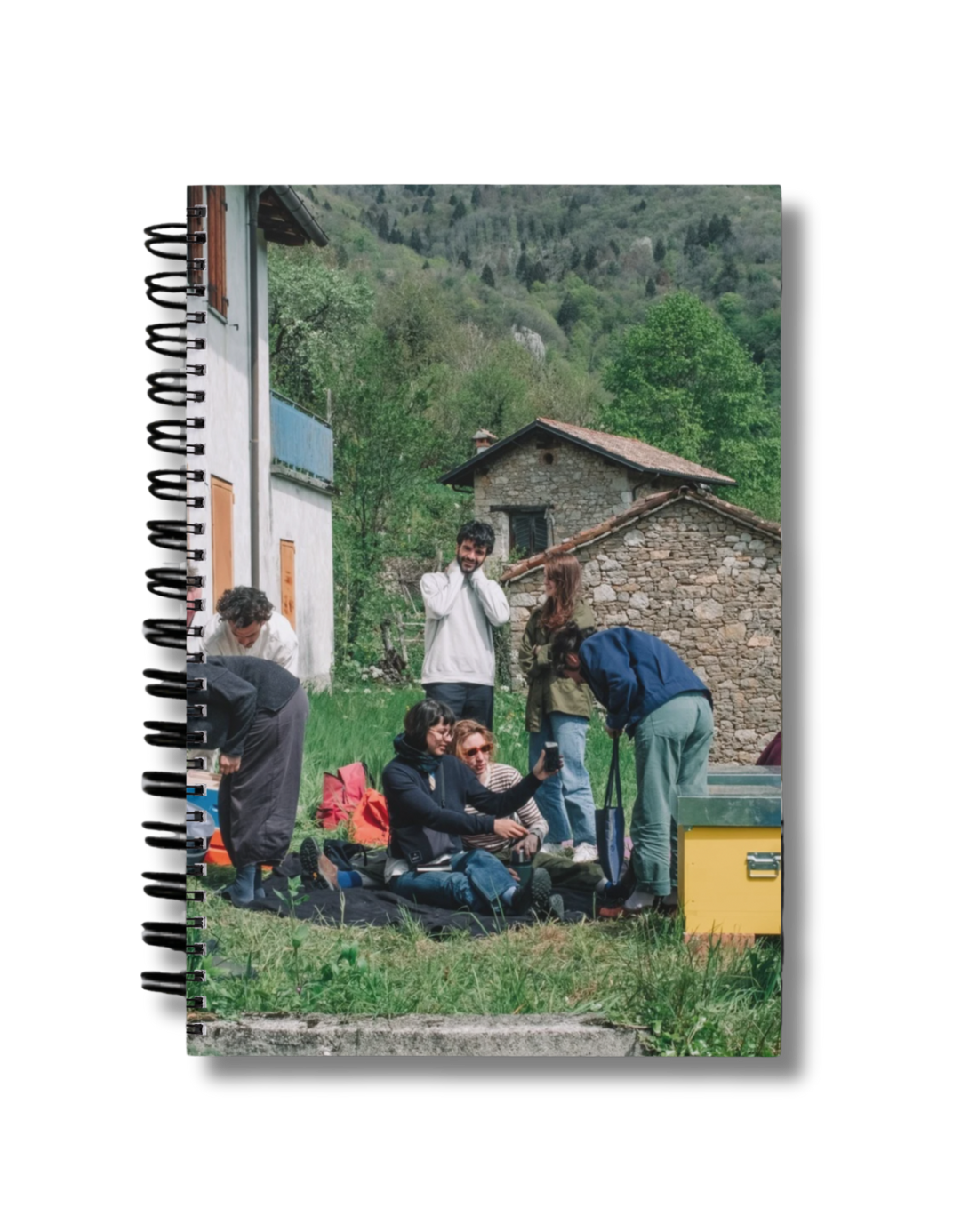
Robida Collective, which made all this possible, is the context and the text of Topolò, the faces and the surfaces, where ecology, art, and thinking intersect, becoming indistinguishable from life itself, in various modalities: of the human and other-than-human, individual and collective, psychic and physiological, the interiority of a dwelling and the outwardly turned attitude of hospitality. Robida—let us recall—is both the name of a collective and the Slovene word for bramble, a plant that grows in an untamable fashion by the sides of roads and on mountains, at the margins and in border areas that are so rife with unexpected exchanges, symbiotic arrangements, and interminable, if also finite, passages. Robida is inherently a conjunction of face and surfaces, of facialized surfaces and surfacing faces: of leaves and stalks and berries and human beings, each by her- or himself and joining together, of the houses and the paths, of all the elements and the ecosystems (the mountains, the forest, the river), without which existence would be impossible. It is this very facialization of the classical elements (earth, water, air, fire) that served as the theme of the seminar I gave in August 2022, but I could understand the broader scope and implications of the thinking and practices folded into the theme only once I found myself there and then, among the perennial and the fleeting faces and surfaces of Robida, to which, for the time being, I humbly added my own.
Much has been said and written about the blurring of boundaries between nature and culture, about the nature-cultures or the culture-natures that make up the world, especially in the grim geological epoch known as the Anthropocene. Despite what I have previously termed “the global dump,” which has triggered profound changes even at the level of the elements, and despite, also, the attitude of a lucid hopelessness, to which I have more recently appealed, this interface of nature and culture was configured otherwise at Topolò. I could sense how, without a tinge of romanticism, the attunement—the deep listening to and acquaintance with—the place and, coincided with its transformation, the mutual transformation of Robida’s face and surface. How did this transpire? How did it come to pass?
Language may give us a hint. While we tend to operate with nouns that are quite abstract and represent a relatively late stage in the use of language, each noun, in its substantiveness and apparent solidity, bears a trace of the verb, out of which it has been generated. So, a face is the outcome of the act of facing, while a surface is the result of surfacing, the gerund serving as a bridge of sorts between the nouns and their corresponding verbs. Here, at this moment (the here-and-now that keeps harkening back to the days in August 2022 in Topolò, when and where the thought sprang up), face and surfaces are the ever so provisional, dynamic outcomes of facing and surfacing, of an active adumbration or change of position. Heliotropic flowers excel in such dynamic facing toward the sun. In the fragile and relatively thin contact zones of the soil and the atmosphere or of marine superficies and the air, it is elemental surfacing that undergoes ongoing adjustments. At Robida, I have witnessed and participated in the facing and the surfacing—the inter-facing and inter-surfacing—that makes this wonderful collective what it is, namely a living an enlivening reinvention of co-existence.