Skip to content

Main Navigation

visibleproject
  • Fellowships
  • Stories
  • Streaming
  • Projects
  • Library
  • Parliaments
  • Who&What
    • What
    • Contributors
    • Yesterday-Today
    • Team and Steering Committee
    • Institutional network
    • About Visible
  • searchDiscover All

Savannah Centre for Contemporary Art (SCCA)

Ibrahim Mahama
Period

2019 - ongoing

Proposed by

Visible Team

Location

Tamale, Ghana

Topics
Climate Crisis Social Design
External links

Project website
Artist website

About the project

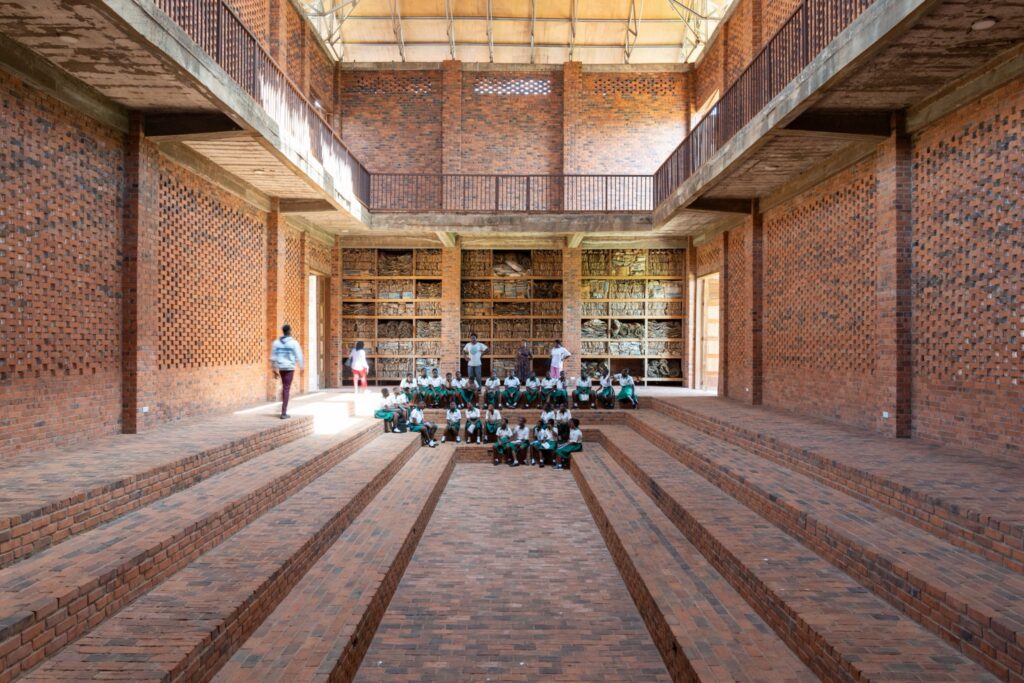
Founded by artist Ibrahim Mahama in 2019 in the northern Ghanaian city of Tamale, the Savannah Centre for Contemporary Art (SCCA) is an artist-run project space, exhibition and research hub, cultural repository, and residency. Conceived as both an artistic and social infrastructure, SCCA Tamale redefines what an art institution can be in a context often lacking such spaces.

chevron_left chevron_right
1 / 5
fit_screen
arrow_upward
SCCA Tamale initiated by Ibrahim Mahama (2019 – ongoing)
arrow_upward
SCCA Tamale initiated by Ibrahim Mahama (2019 – ongoing)
arrow_upward
SCCA Tamale initiated by Ibrahim Mahama (2019 – ongoing)
arrow_upward
SCCA Tamale initiated by Ibrahim Mahama (2019 – ongoing)
arrow_upward
SCCA Tamale initiated by Ibrahim Mahama (2019 – ongoing)

Initially envisioned as Mahama’s studio, SCCA Tamale has evolved into a vibrant cultural institution dedicated to expanding the visibility of Ghanaian and international art, while creating access to contemporary practices in a region that has been historically excluded from major art circuits. The centre hosts exhibitions, residencies, and educational programmes that encourage public engagement and foster community participation across generations.

Grounded in ideas of intellectual and economic emancipation, SCCA Tamale positions art education as a tool for social transformation, extending beyond artistic disciplines to include ecology, architecture, and history. Its architecture, repurposed from industrial sites, reflects the project’s ethos of reclamation and collective labour.

Today, SCCA operates across three sites in Tamale, each engaging local communities through exhibitions, workshops, and cultural events. The initiative has become a model of how investing in art and culture can stimulate civic pride and social change, demonstrating the transformative power of art in economically challenged regions.

chevron_left chevron_right
1 / 5
fit_screen
arrow_upward
SCCA Tamale initiated by Ibrahim Mahama (2019 – ongoing)
arrow_upward
SCCA Tamale initiated by Ibrahim Mahama (2019 – ongoing)
arrow_upward
SCCA Tamale initiated by Ibrahim Mahama (2019 – ongoing)
arrow_upward
SCCA Tamale initiated by Ibrahim Mahama (2019 – ongoing)
arrow_upward
SCCA Tamale initiated by Ibrahim Mahama (2019 – ongoing)

External links

Project website
Artist website

About the artist

Ibrahim Mahama, born in 1987 in Tamale, Ghana, is an artist renowned for his large-scale architectural interventions that involve draping buildings with jute sacks, symbolizing global trade and the post-colonial economic landscape. His collaborative process involves stitching these sacks into a patchwork, reflecting the material's historical significance. Mahama's work addresses themes of global trade, labor, economic inequality, and the socio-political impacts of colonialism in Africa. Notably, he was the youngest artist to participate in the first Ghana Pavilion at the 58th Venice Biennale in 2019. Additionally, he founded the Savannah Centre for Contemporary Art and the Red Clay studio complex in Tamale.
Related Contents

chevron_left chevron_right
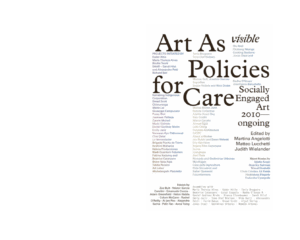
Visible: Art As Policies for Care. Socially Engaged Art (2010—ongoing)
A seminal publication that explores the transformative potential of socially engaged art practices. It presents a new scene of artistic practices that interpret the dematerialization of art into transformative cultural and care policies, addressing the climatic, social, and political urgencies of our times.
Discover more
Otobong Nkanga’s Carved to Flow
The strength of this project lies in the creation of horizontal, rhizomatic spaces, both in the artworld and in the rural and economic system. These spaces, set in two fragile areas like Akwa Ibom and Athens, welcome people affected by the effects of our capitalist society.
Discover more
CATPC
Cercle d’Art des Travailleurs de Plantation Congolaise (CATPC) was founded by plantation workers, trapped at the bottom rung of global value chains, to take centre stage in debates around inequality, the ecological crisis and the legacy of colonialism, by developing a platform to gain agency both in and outside the art world. Since 2014, the
Discover more
Africa is Not a Country
The Temporary Occupation project invites artists to contribute around a certain theme and take over distinct spaces that form part of the urban circuit of a particular city, which in 2014 shall be hosted by the city of Mindelo – Cape Verde. The collective exhibition results from the exploration of a theme that is represented
Discover more
Sowing Somankidi Coura: A Generative Archive
In 1965, at the age of 17, Touré left the newly founded republic of Mali, and travelled to the capital of its former colonizer, France, to work in the car industry, underpaid and with an unsustainable number of working hours. After purchasing a small Kodak Retinette, he started to document the precarious working and living conditions of migrant workers and their struggles. In 1975/76 he and several members of the independent Association Culturel des Travailleurs Africains (Cultural Association of African Workers) decided to engage in farming in the region of Haute-Marne. In 1977, Touré along with fourteen former activist migrant workers founded the agricultural cooperative Somankidi Coura on the shore of the Senegal River. They decided to propose an alternative way of thinking and subsistence agriculture (une agriculture vivrière/ouvrier) meant to provide alimentary self-sufficiency. Somankidi Coura has and is driven by a strong socialist ideal of self-sustainment, inter-dependence and connectedness. Today, the cooperative is run by around five hundred people representing an extraordinary example of agriculture as a site of resistance, including cooperatives that generate healthy rural self-organised communities. The local school building houses Touré’s photographic archive of Somankidi Coura’s development throughout the decades, to inspire other communities in building new planetary alternatives based on practices of soil care. Sowing Somankidi Coura: A Generative Archive is a long-term research endeavour by the French artist Raphaël Grisey in collaboration with Bouba Touré and other co-founders of the cooperative around the permacultures and archives of Somankidi Coura. JW
Discover more
Museum of Contemporary African Art
Museum of Contemporary African Art is the catalogue of the eponymous exhibition that was presented at Tate Modern in 2013 by artist Meschac Gaba. We could also have started this note by saying that it was an artwork in itself, since the artist deployed a museum infrastructure at the very heart of Tate’s museum display. In fact, not being able to project himself within these walls, he made sure that the space adapted to his needs rather than settling for denying his own reality. This echoes the feeling of evolving inside a culture that is not one’s own, while still wishing to find one’s place within it. It also echoes the fact that art history, in many respects, makes invisible the bodies that could be described as ‘unsanctioned’. Museums as places of display often echo this negation. However, and since Meschac Gaba has shone in one of the places of conceptual legitimation which defines what we commonly call ‘contemporary art’, the door is today truly open to us. 
Discover more
Chale Wote Festival (Accra, Ghana)
Walking in the streets of James Town in Accra gives a particular feeling. A feeling of walking into a book, into a space where something happened before, a space where we can feel past vibrations. The walls are covered by fading paintings telling different narratives which are today superimposed by new paintings, writings, adverts etc. JamesTown is turned into a space for encounters, intervention and dialogue. The Chale Wote festival constitutes one of the most important festivals on the African continent that strives to revive memory and past history through performance arts. The body is put in relation with the city and its community in interesting ways. 
Discover more
We are unable to show you a video, here.
Details
© Visible 2025. All images © of their respective owners.
  • Fellowships
  • Stories
  • Streaming
  • Projects
  • Library
  • Parliaments
  • Who&What
  • Discover All
  • Instagram
  • Facebook
  • Newsletter
© Visible 2025. All images © of their respective owners.
cached
We use cookies to ensure that we give you the best experience on our website. If you continue to use this site we will assume that you are happy with it.